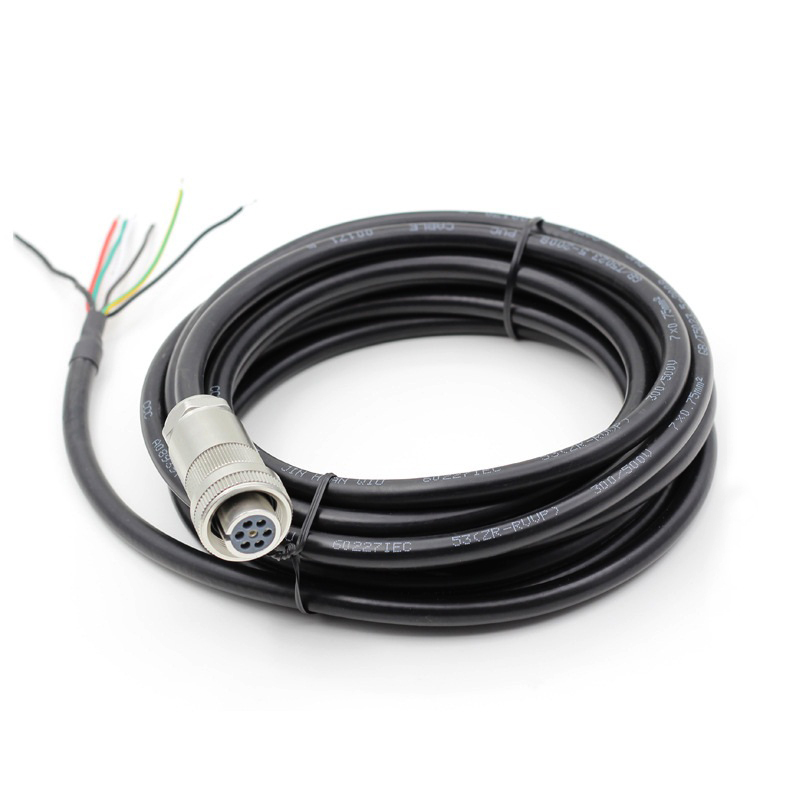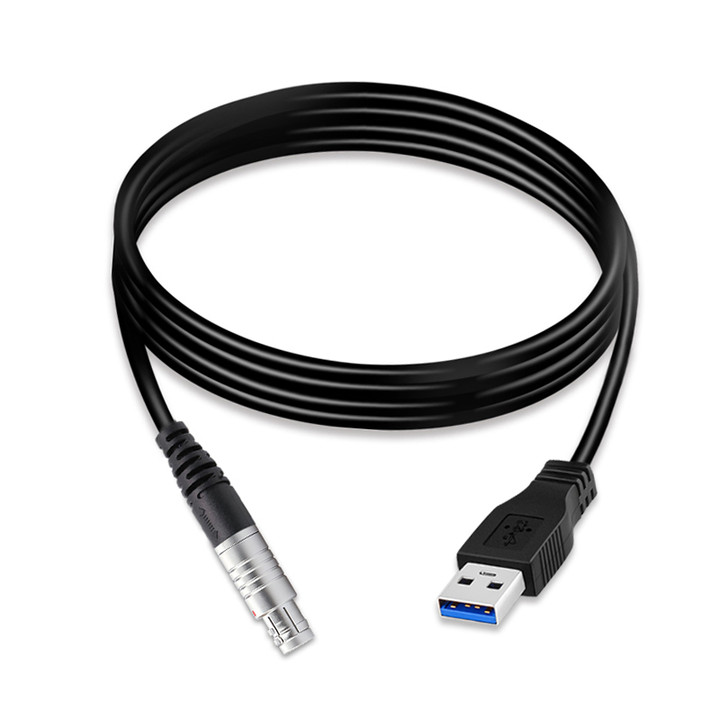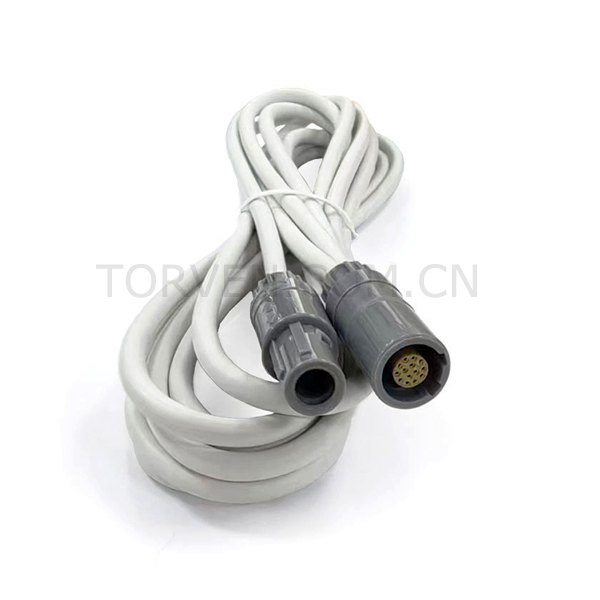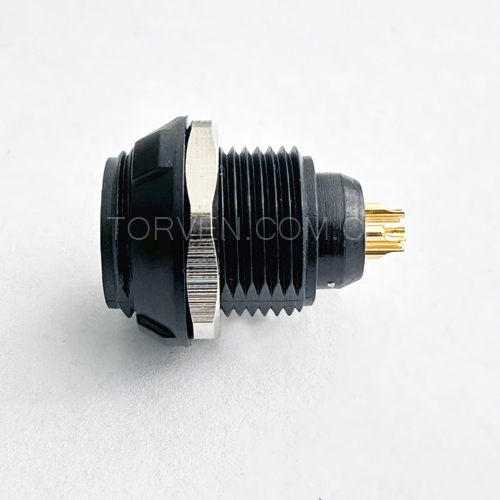


Connectors must be secured in place without ever losing contact, but also have a way to allow technicians or operators to easily connect and disconnect equipment. In circular and industrial connector designs, there are two popular quick-lock methods: push-pull and bayonet. The difference between Push Pull vs Bayonet Locking Connectors is primarily the way that the mating parts slide into and out of the connector: push-pull designs engage by directly pushing and sliding the mating parts out by pulling them back, while bayonet designs generally engage by sliding and then a slight rotation. Choose the appropriate type based on vibration, connection speed, environmental exposure, mechanical demands and mating frequency, among other factors, and available space.
What Are Push-Pull Locking Connectors?
Push-pull locking connectors are self-locked connectors which are locked when the plug is inserted in the receptacle. Normally, the user will align the connector and insert it into place with just a single motion, instead of having to make multiple turns, which is what occurs in a threaded connector. It is disconnected by operating the designated release sleeve or mechanism, and pulling the plug away. Push-pull connectors can be useful for equipment that are required to connect and disconnect frequently or when the operator does not have easy access to the connector. Many of these designs also can accommodate blind mating whereby the connector can be mated without being able to see the mating interface.
Advantages and Limitations of Push-Pull Connectors
Main advantages are quick mating time, no tools required, easy handling and repeated matting applications. They are also helpful in small equipment as the user will not have to turn the connector multiple times. But the performance is different for different locking mechanism, housing, contact, sealing and mechanical designs. For engineers, the only way to be certain is to refer to the manufacturer's specifications and not take it for granted that all push-pull connectors perform the same basic functions when it comes to retention strength, environmental protection, mating cycles, and vibration performance.
What Are Bayonet Locking Connectors?
Bayonet locking connectors are mechanical locking connectors that work through insertion and rotation. The plug is positioned, inserted, and then pivoted a small distance to make contact with the receptacle, either with pins, slots, or ramps (or lugs) to hold the connector in place. This provides the operator with a simple mechanical locking operation without having to rotate a threaded coupling for a longer period of time. Bayonet systems are commonly employed in situations where fast assembly, repeated mating and mechanical engagement are a critical factor. Additional features include tactile or audible confirmation of when the connector is in the locked position in some designs.
Advantages and Limitations of Bayonet Connectors
In addition to providing a fast fashioning, the bayonet connector can be mechanically locked, which can be helpful in industrial and other demanding environments. They don't also suffer from the cross-threading issue with threaded connectors. The operator must have sufficient room in which to make the rotation, however, and the connector must be properly aligned before locking is completed. The true resistance to vibration, shock and accidental separation also differs among families of connectors, so be sure to check the appropriate technical specifications prior to selection.
Push Pull vs Bayonet Locking Connectors: Key Differences
The two types of connectors are basically the same, except for the physical action needed to set the lock. In general, a push-pull connector will require a straight push to attach and a pull and a release to detach. A bayonet connector must be pushed into and rotated to connect. This disparity has on impact on equipment layout and on the time it takes for an operator to do repeated connections. In addition to Push Pull vs Bayonet Locking Connectors, other factors that engineers should consider are the available installation space, operation environment, connector orientation, mating frequency, and the mechanical and environmental performance required.
|
Feature |
Push-Pull |
Bayonet |
|
Locking action |
Push-to-lock |
Push-and-twist |
|
Rotation required |
No |
Yes |
|
Mating speed |
Very fast |
Fast |
|
Operation |
Simple axial movement |
Axial movement + rotation |
|
Maintenance |
Convenient for frequent access |
Quick but requires rotation |
|
Blind mating |
Often suitable |
More dependent on design |
|
Vibration performance |
Design dependent |
Design dependent, positive mechanical lock |
|
Space requirement |
Primarily axial |
Axial + rotational clearance |
Push Pull vs Bayonet: Performance Factors to Consider

The speed of the connection is only one factor to consider when comparing Push Pull vs Bayonet Locking Connectors. The frequency of mating or unmating must be taken into consideration since if the equipment is mated frequently, it can be advantageous to have a mechanism which can be mated and unmated quickly. Other considerations to keep in mind are available space. Push-pull systems are primarily axial-movement systems and bayonet systems require space for locking rotation.
They should also be checked for vibration and mechanical stress. A connector should have a consistent connection when subjected to the motions and stresses of its use. Environmental conditions also play a role, especially if your equipment is in dust, water, chemicals, temperature, and outdoor conditions. The locking method should be checked in conjunction with the sealing arrangement, the material of the housing and the IP rating of the connector as well as the protection of the contacts. Circular connectors are widely available in a variety of configurations, and the specifications are different for each product.
Another important factor is the requirements during mating season. Repeated locking and unlocking will cause repeated mechanical stress on locking parts and electrical contacts. Engineers should consider manufacturer's rated mating cycles, not just coupling style.
Applications of Push-Pull and Bayonet Locking Connectors
There are many industrial and technical applications that use push-pull and bayonet mechanisms. Push-pull connectors are often employed in instrumentation, industrial automation, medical equipment, test and measurement systems, broadcast equipment, and other applications which benefit from quick connection. Bayonet connectors are also found in other systems and industrial equipment, where a mechanical “key” or “bayonet” lock is suitable for the quick engagement requirement.
In real world scenarios, the connector should exactly meet the complete system needs. For instance, medical or measurement equipment may need to focus more on ease of handling and repeated mating, while industrial equipment could demand secure mating, environmental sealing and mechanical strength. It doesn't just depend on the application, but also on the connector name.
How to Choose Between Push-Pull and Bayonet Locking Connectors
The choice of the two mechanisms depends on a review of electrical, mechanical, environmental and maintenance requirements of the equipment. First, determine how quickly the connector needs to be mated and unmated and how frequently this process will occur. Then determine if the space at the installation site is adequate for the bayonet's range of motion. The vibration, shock, movement of cables, temperature, moisture, dust and chemical exposure should also be taken into consideration.
It's also a matter of electrical requirements. The appropriate connector configuration may depend on contact count, current rating, voltage rating, signal needs, cable size, level of shielding and need for strain relief. In addition, engineers should inspect the service requirements, the mating-cycle ratings, the dimensions of connectors, the way they are mounted and their IP protection level. When you take all these things into account, you'll have a better idea of which locking system suits you than if you just consider the connection speed. This is the reason Push Pull vs Bayonet Locking Connectors must be regarded as an application specific engineering decision.
Why Connector Component Manufacturing Matters
The precision of each of the individual components also has an impact on the performance of a locking connector. The dimensions of the housing, the position of the contacts, the locks, sleeves, pins and other small parts must be consistent with each other for the connector to mate and function as intended. As the size of connectors gets smaller or their design more intricate, precision manufacturing becomes even more crucial. Tolerances are often critical for molded connector housings, terminals and inserts, and other molded components in connector manufacturing, and dimensional accuracy is a critical factor for assembly and performance.
In situations where manufacturers require small, intricate metal parts in large volumes, Metal Injection Molding (MIM) can be relevant. The process can be used for the development of complex geometries and can include molding, controlled debinding and sintering. For connector related components, the manufacturing method should be determined based on the required material, geometry, tolerance, production volume and final application. Precision component production can ensure the repeatability of dimensions in repeated production.
Push Pull vs Bayonet Locking Connectors: Which One Fits Your Application?
Depending on the equipment's requirements, either of these mechanisms may be used. When quick, easy connection and release is a necessity, especially in limited space for rotation, push-pull designs should be considered. If it can be done in a short period of time with a fit and twist type attachment that is adequate for the equipment layout and mechanical requirements, then bayonet designs might be appropriate. Both mechanisms are not necessarily applicable for all uses. Before finalizing the choice a connector specification should be read to take note of the electrical ratings, mechanical retention, environmental sealing, connector dimensions, mating cycles and installation requirements.
FAQ:
Are Push-Pull Connectors Faster Than Bayonet Connectors?
Push-pull designs can be very fast to mate as they rely on a straight push. Quick connection is also possible with bayonet connectors, but with a rotational locking step. This will vary with connector and installation type.
Are Bayonet Connectors Suitable for High-Vibration Environments?
The performance of bayonet connectors in terms of vibration resistance can differ according to the design required for the specific application. Engineers must evaluate manufacturer's vibration, shock, retention and environmental requirements in addition to the bayonet mechanism.
Which Connector Is Better for Frequent Mating and Unmating?
Both types may be appropriate for repeated mating and unmating if designed to be so. Before the selection of a connector, the rated number of mating cycles, locking, contact construction and operating conditions should be considered.
What Should Engineers Consider When Selecting a Locking Connector?
These include connection speed, space, mating frequency, vibration, shock, environmental exposure, IP protection, contact count, electrical ratings, cable size, mounting requirements, mating cycles and maintenance requirements.
Conclusion
The two connector mechanisms offer practical solutions for fast and secure equipment connections, but with different locking movements and may be appropriate for different installation situations. Push Pull vs Bayonet Locking Connectors should therefore be judged on the whole application rather than the locking style. By examining operating space, mating frequency, vibration, environmental protection, electrical requirements and component quality, engineers can find a connector configuration that is suitable for the equipment and production requirements.