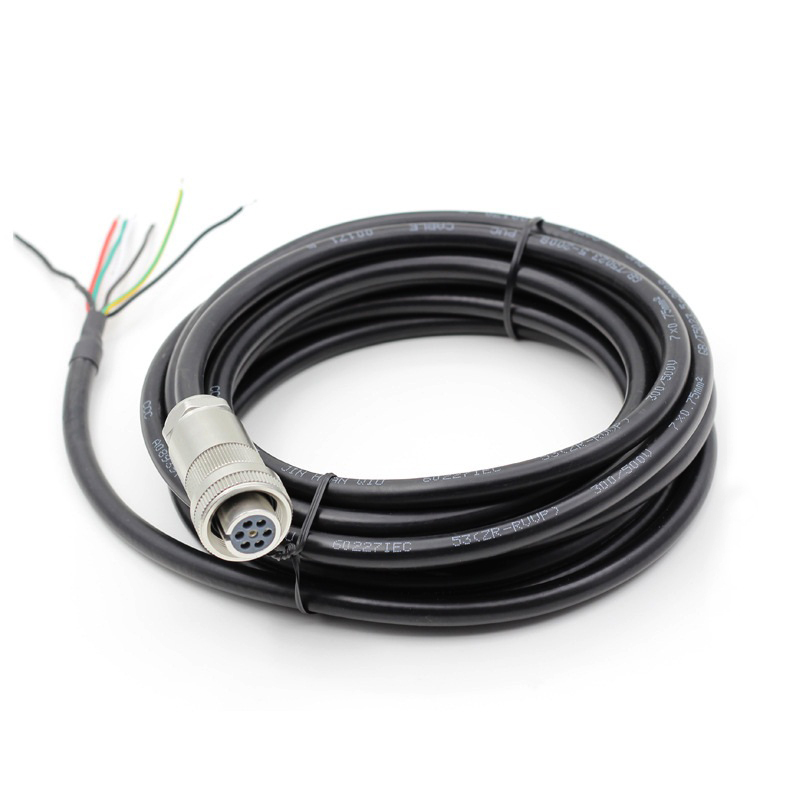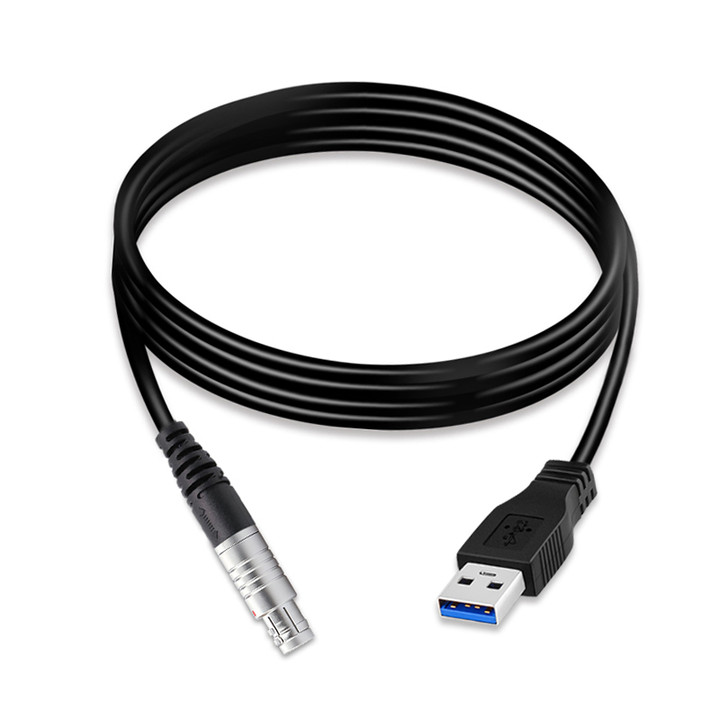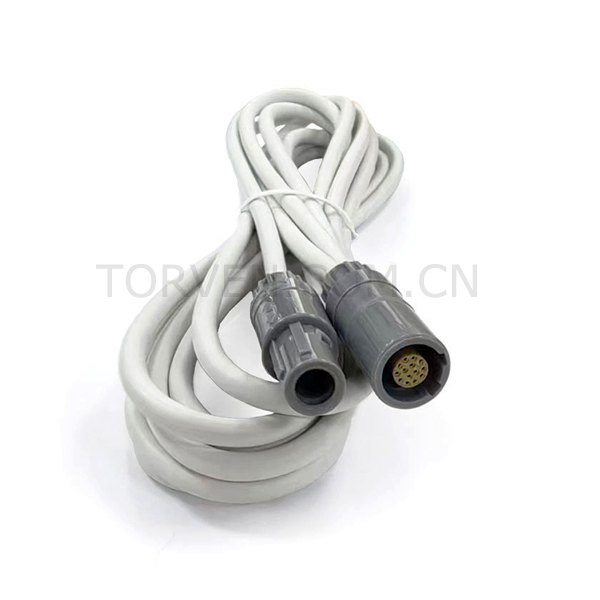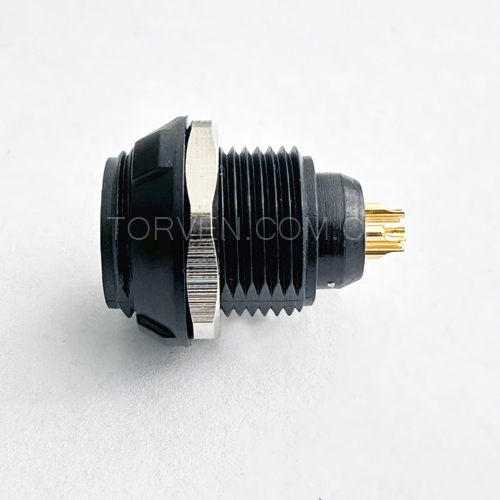

Today's robots rely on motors, servo drives, sensors, controllers, cameras, encoders, and high-speed communications for accurate movements. They also can produce electromagnetic interference (EMI) that can interfere with other signals and communication between various parts of a robotic system. Industrial Connectors can help solve this issue by ensuring the consistent reliability of electrical connections and, if designed correctly, by providing shielding and grounding of sensitive signal paths. This article will discuss the origin of EMI in robotics, how connector shielding operates, the characteristics to look for and how these relate to reliable operation of a robot and how the connector can be selected and used to meet those requirements.
What Is EMI in Robotics?
Electromagnetic interference is the unwanted electrical or electromagnetic noise that can be received by another circuit or an electronic device. Robotic systems can be susceptible to EMI from servo motors, motor drives, variable-frequency drives, switching power supplies, inverters, relays and other high power equipment. This interference can be carried by cables or radiated in the environment. High noise levels or poorly designed cables and connections can cause disturbances in sensitive systems like encoder feedback, sensors, machine vision equipment, safety signals, and industrial Ethernet.
Common Sources of EMI in Robotic Systems
Robots frequently work in an electrically noisy environment. Servo motors and drives switch power quickly and this can result in electrical noise, and switching supplies can also cause electrical noise. Strong electromagnetic field may also be generated by welding equipment and other high power machines. When sensitive signal cables are close to motor or power cables problems become more evident. This noise could result in corrupted data, sensor reading anomalies, communication issues, or even unreliable robot operation.
Why EMI Protection Matters in Industrial Robotics
Communication is vital for robots as many operations rely on the accuracy of information from the sensors, encoders, cameras, and controllers. EMI can cause loss of signal strength and cause intermittent communication issues that are hard to troubleshoot. As data rates get higher, signal integrity is even more critical in high speed systems like Industrial Ethernet. An appropriate connection system can also minimize the impacts of electrical noise and contribute to the mechanical durability required for vibration, motion, and repeated use.
How Industrial Connectors Reduce EMI
A connector can be included in the electromagnetic shielding circuit in addition to just connecting two cables or components. Shield continuity between cable shield, connector body and equipment enclosure can be maintained through proper design of shielded connections. It establishes a conductive barrier around the sensitive signal paths, and it minimizes the chances for external noise to enter the system. When using shielding, it is best to consider it as a complete system; if the shielded cable has an EMI weakness, it can be as a result of the connector termination, or by leaving a gap.
Maintaining Continuous Shielding
It is important to provide continuous shielding as gaps in the shield will diminish the effectiveness, especially at higher frequencies. If the connector is designed correctly, it can keep the shield of the cable from the connector to the enclosure of the equipment. Some designs help to maintain this path with metal shells, conductive backshells, or other shielding. The intent is to keep the connector area from being the only point where a cable assembly is not protected.
Using Metal Shells and Shielded Housings
Another barrier to electromagnetic noise can be provided by metal shells and conductive housings. They are particularly helpful when working near equipment that has high electrical interference such as motors, drives, welding systems, or other equipment. Metal-shell connectors, shielded backshells, and metallized parts can help to ensure that the EMI/RFI protection is maintained as well as add mechanical strength, depending on the application. The material for the connector should still be chosen based on the full electrical, mechanical and environmental needs of the robot.
Supporting 360-Degree Shield Termination
A 360 degree shield connection provides to maintain a continuous conductive barrier around the cable instead of a connection through a small point. This method may be useful for high frequency and high speed signals. But the termination of the shield must be designed as part of the entire cable and connector system, including the cable construction, connector geometry, mounting and grounding. It is important to choose a connector that is marketed as shielded, but it is not sufficient if the assembled connection will not maintain the shielding path.
Providing Reliable Grounding Paths
Grounding and shielding are not the same but they do work together. A connector can offer a conductive pathway between the cable shield and equipment chassis that helps unwanted currents to follow a desired path. The type of grounding required is related to the design of the system, type of signal, frequency and EMC requirements. The cable, connector, chassis and ground plan must therefore be taken together and not as separate entities called the connector.
Industrial Connector Features That Help Control EMI
Engineers need to choose connectors for robotics that offer more than just voltage and current ratings. Conductive housings, shielded cable compatibility, shield termination and security of cable mating, strain relief and suitable environmental protection are all useful features. For high-speed data applications, it can also be necessary to have controlled signal characteristics and much crosstalk and interference protection. Mechanical durability is also important since vibration, bending, twisting and repeated mating can impact contact and shielding performance over time.
Choosing Industrial Connectors for Different Robotic Applications
The signal being sent and the type of robot may vary the requirements for connectors. Compact connections capable of continuous vibration and motion may be needed for robotic arms. Connectors for AGVs and AMRs must be capable of moving, shock and vibration resistance, and frequent data communications. There is a need for stable high-speed communication for machine-vision systems and reliable power and feedback for servo systems. In electrically noisy factory conditions, specialized shielded connectors can be employed to provide signal integrity and higher data rates for Industrial Ethernet applications.
|
Robotic Application |
Important Connector Considerations |
|
Robotic arms |
Shielding, vibration resistance, flex compatibility |
|
AGVs and AMRs |
Secure locking, shielding, compact design |
|
Machine vision |
High-speed performance and signal integrity |
|
Servo systems |
Power handling, shielding, reliable feedback |
|
Industrial Ethernet |
Shield continuity and high-speed transmission |
|
Factory automation |
EMI protection, durability, environmental sealing |
Common Connector and EMI Design Mistakes
There are a number of options for connectors that can compromise EMI protection even if the rest of the robotic system is well designed. Some typical errors include putting unshielded connectors close to strong EMI sources, breaking the integrity of the cable shield, providing poor cable termination, selecting an inappropriate grounding method, and failing to keep the cable shield length in the zone of contact with the ground. The other error is to select a connector based on its current rating or voltage rating and not take into account the speed of the signal, EMI environment, cable vibration, cable movement and environmental conditions. These should be taken into account when designing the system.
How to Improve EMI Protection in Robotic Connector Systems
The beginning of good EMI performance is, before the installation of the connector. Engineers must identify the main noise sources, where possible, keep high power cables away from sensitive signal cables, and ensure suitable shielded cables are used and connections are made maintaining shield continuity. The shield should be cut off properly, the grounding should be done according to the EMC design of the system, and the strain relief should not allow it to move and break the connection. It is also crucial to test the entire cable and connector assembly, since the actual performance of the system depends on the entire assembly, not the connector specification.
Why Connector Design and Cable Design Must Work Together
If the cable, routing, termination or grounding is not well designed, the connector by itself will not be effective against EMI. The cable shield must extend through the connector and the connector and enclosure must retain the desired shielding path. Cable routing is also important because sensitive communication cables run near high power motor cables can lead to greater interference problems. As such, the connector, cable, shield, termination, enclosure, and grounding should be considered as single system to be evaluated by the engineer.
Benefits of Using Proper Industrial Connectors in Robotics
An effective connection system can facilitate enhanced signal integrity, secure data transfers, and more stable functioning in electrically noisy settings. It can also aid to shield delicate electronics from interruptions and limit the danger of dropouts. Connectors that can also be designed to resist vibration, repeated motion, environmental conditions, and frequent service can also help to ensure system reliability. These benefits can be especially significant in automated production facilities that can go down or need maintenance if there is a breakdown in communication.
How to Select the Right Industrial Connector for a Robot
Engineers should take into account the type of signal or power the connector will be handling, the anticipated EMI environment, the shielding needs for the cable, and the grounding configuration that will be needed prior to making a selection. Consideration of mechanical factors like vibration, repeated bending and twisting, mating cycles, installation space and type of locking should also be done. Requirements for IP protection and materials can be dependent on environmental conditions like moisture, dust, chemicals and temperature. Bandwidth, impedance, crosstalk and signal integrity aspects should also be considered when selecting data for high speed applications.
FAQ:
Do industrial connectors prevent EMI completely?
No. EMI control needs a whole system approach, and a connector can contribute to the reduction of EMI if it is designed, shielded, terminated and grounded correctly. Based on the application, selection, routing, grounding, enclosure design, and filtering of the cables can also be needed.
Why are shielded connectors used in robotics?
Shielded connections ensure a conductive barrier on delicate signal paths. This can reduce the amount of unwanted electromagnetic energy that can reach the signal conductors and help maintain the integrity of the communications in the environment of motors, drives, and other sources of noise.
Can a connector cause EMI problems?
Yes. An EMI weak point can be the result of poor shield termination, broken shielding continuity, inadequate grounding or a poor connector design. Hence, the entire cable and connector assembly, not just the connector, should be considered.
Are metal connectors better for EMI protection?
Metal shells offer some useful protection in high noise industrial surroundings, but the material is not enough to ensure good EMI performance. The connector should function properly with the cable shield, termination, chassis, grounding and system design.
What is 360-degree EMI shielding?
The 360-degree shielding refers to the cable shield that is connected around the connector interface to create a more continuous conductive shield. It is widely used in cases when high frequency signal integrity and high EMI protection are required.
Conclusion
Designing for EMI is a crucial element in modern robotic systems due to the fact that many components in these systems, such as motors, drives, switching electronics, and high speed communication devices, can produce electrical noise. When used properly, and installed correctly, Industrial Connectors can ensure shield continuity, signal integrity, and reliable grounding paths. But, the connector should always be taken in conjunction with the cable, termination, routing, enclosure, and grounding. An all-in-one solution for EMI control can facilitate reliable and consistent communication between robotic systems and their controllers in challenging industrial environments.