
What is a Circular Connector
A circular connector is a cylindrical electromechanical interface with a round mating surface, used for transmitting power, signals ; data. Its circular design provides inherent self-locking, vibration resistance, and sealing capabilities. Compared to rectangular connectors, it is easier to achieve waterproofing and blind mating, making it widely used in military, aerospace, and harsh industrial environments.
The importance of Circular Connectors in industry
Circular connectors are vital in industry for three main reasons:
1. High reliability and durability: Their circular design with threaded/bayonet locking mechanisms provides excellent resistance to vibration, shock, and harsh factory environments containing oil, dust, or moisture.
2. Sealing and protection: They easily achieve IP67/IP68 waterproof ratings, preventing ingress of liquids and solid particles, ensuring equipment safety in outdoor or wash-down environments.
3. Quick blind mating and space efficiency: The circular shape allows high-density pin arrangements with good guiding for blind mating. This enables fast operation in tight or obstructed-view cabinets, greatly improving installation and maintenance efficiency.
Three common Circular Connectors
l Threaded Connectors
Threaded couplers are ideal for applications with strict performance requirements and low mating cycles. Threaded connectors achieve full engagement after just four turns of the coupling ring. For added security and reliability, lockwire holes are provided along the outside of the coupling ring.In addition to being an economical option, there are also advanced coupling design features available for military D38999 connectors. This type of threaded connector features both triple-start threads and a ratcheting coupling to ensure a secure connection, even in high-vibration applications. Threaded circular connectors are commonly found in communication equipment, heavy machinery, military aircraft, and missiles.
l Bayonet Connectors
Bayonet couplers are extremely easy to install, offering both speed and convenience through their simple “push and twist” mating motion that makes them well adapted for applications where frequent mating and unmating are required. Coupling/decoupling is achieved through a one-third turn of the coupling ring, and mating is gained through the use of bayonet pins and ramps instead of threads.Circular bayonet connectors are ideal for blind mating and widely used in rugged industrial environments with shock and vibration.As industrial connectors, they are commonly used with power generators, sensors, and engines.
l Push-Pull Connectors
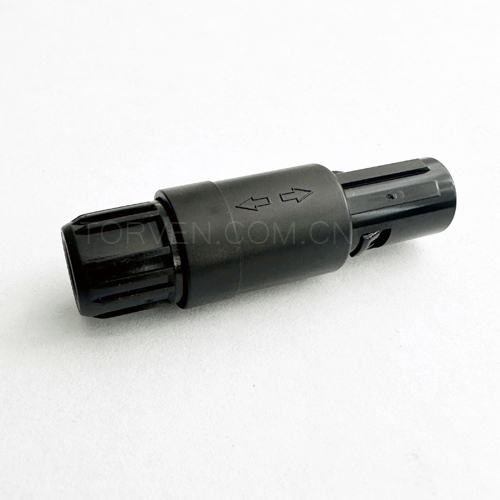
Push-pull circular connectors adopt a self-latching mechanism to prevent accidental disconnection that involves pushing a plug into a matching socket. Once connected, it cannot be disconnected by simple pulling. Users need to squeeze the connector body and pull outward to release it.Unlike more traditional connectors that require a rotational force to achieve mating and unmating, push-pull connectors rely on an axial force.Push-pull connectors can provide significant space savings because the connection/disconnection procedure requires that a technician use only two fingers. This, in turn, allows multiple connectors to be mounted close to one another.Circular connectors with push-pull coupling are very well suited to applications where reliability is critical and fast connect/disconnect is possible. Such applications include medical, instrumentation, soldier wearables, communications, and military vehicles.
Factors to Consider When Selecting a Circular Connector
l Environmental protection
One of the most important factors to consider is environmental protection. Waterproof circular connectors with IP67 or IP68 ratings are designed to prevent water and dust from entering the connection interface. These connectors are ideal for outdoor applications and harsh industrial environments where exposure to moisture is unavoidable.
l Electrical Performance
Electrical performance is another critical aspect. High current circular connectors are required for power transmission, while signal circular connectors are used for data communication. In many applications, hybrid circular connectors that support both power and signal transmission are preferred. These connectors help reduce the number of connection points and improve system efficiency.
What are the important properties of Circular Connectors in industrial applications
When buyers compare circular connectors, the most important features are not always the most visible ones. A connector may look strong and professional, but the real value is in how well it performs under load, vibration, and environmental stress.
The key features to review are:
l Electrical rating
The connector must be suitable for the actual voltage and current of the system. A connector that is too small for the application may heat up or wear out faster than expected.It is recommended to reserve a sufficient safety margin instead of selecting an underrated connector.
l Sealing level
If the connector will be exposed to dust, moisture, or outdoor weather, sealing becomes very important. Many industrial buyers look for IP-rated connectors, such as IP65 or IP67, depending on the application. The exact level should match the real working environment, not just the product description.
l Locking mechanism
A good locking design helps the connector stay secure under vibration. Threaded circular connectors are common in industrial equipment because they are stable and easy to understand. In some projects, quick locking or bayonet styles may also be considered, but the buyer should always check whether the connection needs frequent access or long-term stability.
l Housing material
Metal housings are often chosen for strength and durability. Plastic housings may be lighter and more economical, but they are not always the best option for harsh environments. The right material depends on the balance between cost, protection, and weight.
l Contact quality
The contacts inside the connector matter just as much as the outer shell. Good contact alignment and stable plating help reduce resistance, improve connection consistency, and lower the risk of intermittent signal issues.
What should buyers compare between models?
Many buyers begin with pin count, but pin count alone does not tell the full story. Two connectors with the same number of pins may differ in size, sealing, termination style, and mechanical durability. That is why a proper comparison should include both technical and practical factors.
Here are the main things to compare:
l Pin count and signal arrangement
The connector should have enough contacts for the application without becoming unnecessarily large or expensive.
l Termination method
Solder cup, crimp, screw terminal, and PCB mount versions all have different assembly advantages. A production team may prefer a termination style that speeds up assembly and reduces assembly errors.
l Connector size
The shell size must fit the available space, panel opening, and cable routing. If the connector is too bulky, it can create layout problems even if the electrical specs are correct.
l Sealing performance
For industrial use, the sealing level should be chosen based on the environment rather than assumed from a general product category.
l Supply consistency
For procurement teams, stable lead time and repeatable quality are often as important as the unit price. A low-cost connector that is difficult to reorder can create more trouble than value.
l Customization options
Some projects need custom cable length, different wire colors, special labeling, or specific packaging. A manufacturer that can support these requirements may be easier to work with in the long run.
What Details Should You Ask the Connector Manufacturer?
This is one area many buyers overlook. A connector may look good in a catalog, but the way it is manufactured, packed, and delivered can have a big impact on the final project. If you are buying from a manufacturer rather than a trading company, it is worth asking questions that go beyond the basic product spec.
Useful questions include:
What is the normal lead time for this model?
Can you provide both connector halves consistently?
Do you support custom cable assemblies?
How do you pack the connectors to protect threads, pins, and seals during shipment?
Can you supply replacement parts for maintenance or repair?
What wire gauge or power range do you recommend for this connector?
These questions help you understand whether the supplier can support a real project, not just sell a sample. For export buyers, packing quality and replacement support can be just as important as the connector itself. Poor packing may damage the threads, deform the contacts, or reduce the sealing performance before the product even reaches the customer.
Connector Selection for Common Industrial Application Scenarios
For a basic sensor application, a compact connector with the right pin count and suitable sealing is usually enough.
For a machine exposed to vibration, choose a connector with stronger locking and a more durable housing.
For outdoor or washdown environments, sealing and cable retention become more important than a small price difference.
For projects with repeated production orders, supply stability and assembly consistency should also weigh heavily in the decision.
In many cases, the best connector is not the most advanced one, but the one that is easiest to install correctly and easiest to reorder later. That is why engineers and procurement teams often benefit from reviewing samples together before confirming the final choice.
Torven Circular Connectors
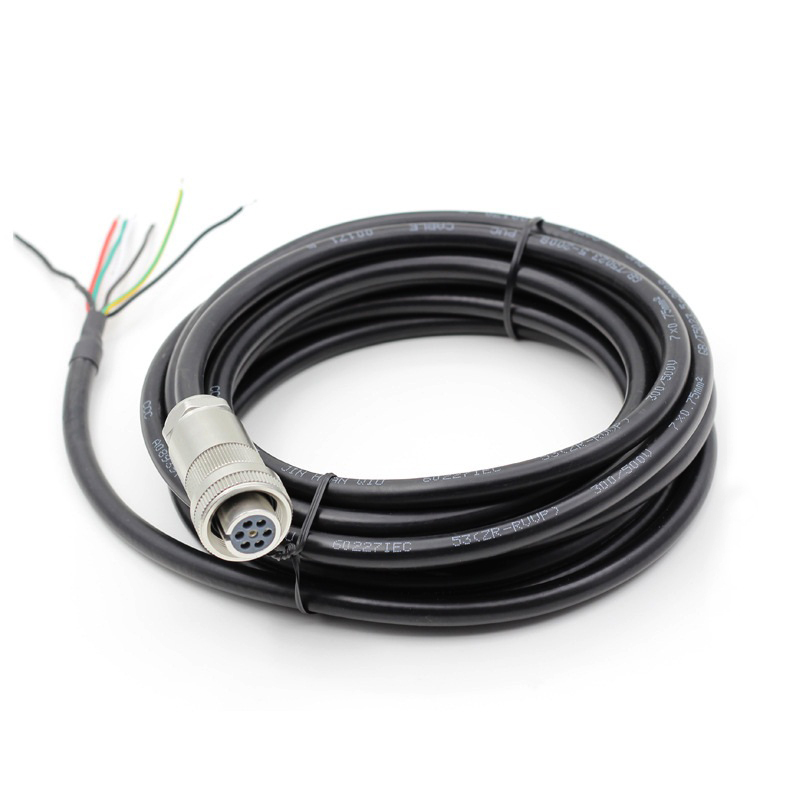
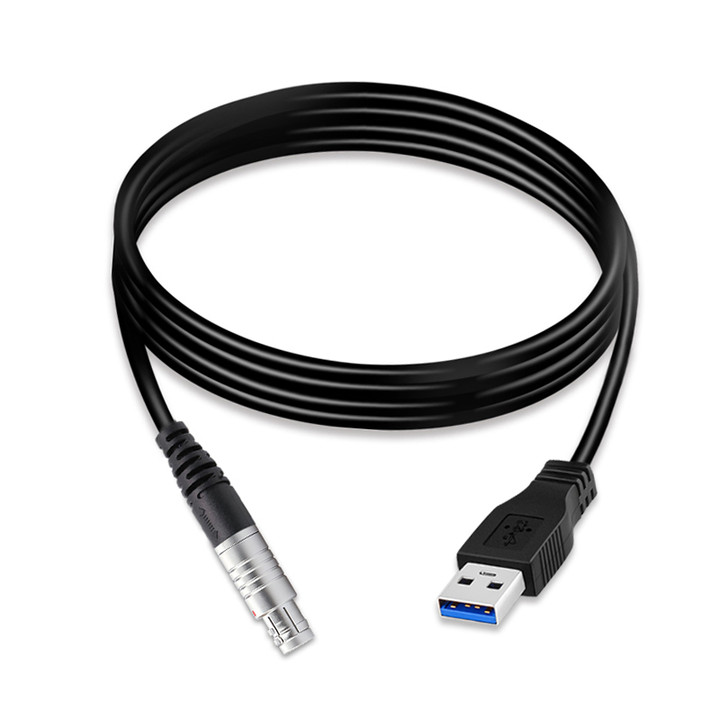
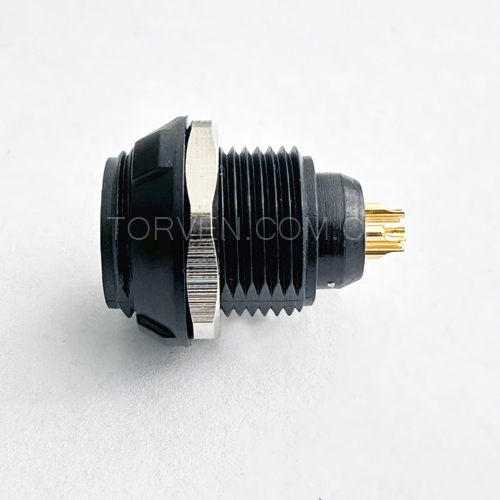
Torven provides a wide range of circular connectors designed for industrial and outdoor applications. These include waterproof circular connectors, high current connectors, and customized cable solutions. Each product is designed to meet high standards of performance and reliability, ensuring stable operation in demanding environments.
l AT-SP-ZH-7P-LX
l DAS-AM30-1Y304-L1500N
l 1PK-A-05-N-L-N
l 1PF-A-05-N-A-C-XX-N
l SP-ZH-7P
Conclusion
Choosing the right circular connector for industrial use means matching the connector to the application, environment, and installation method. The most important factors are electrical rating, sealing, locking structure, housing material, and termination style. Engineers should focus on performance and fit, while procurement teams should also look at lead time, consistency, packaging, and total landed cost. When these details are reviewed early, the result is usually a more reliable project and fewer problems after installation.